
Writing as a Path to Clarity: The Meta-Skill That Sharpens Your Thinking
Writing is not just communicating ideas. It is a way of having them. Discover why writing is the meta-skill that sharpens everything else.

Santiago Vini Garcia
Published on January 1, 1970
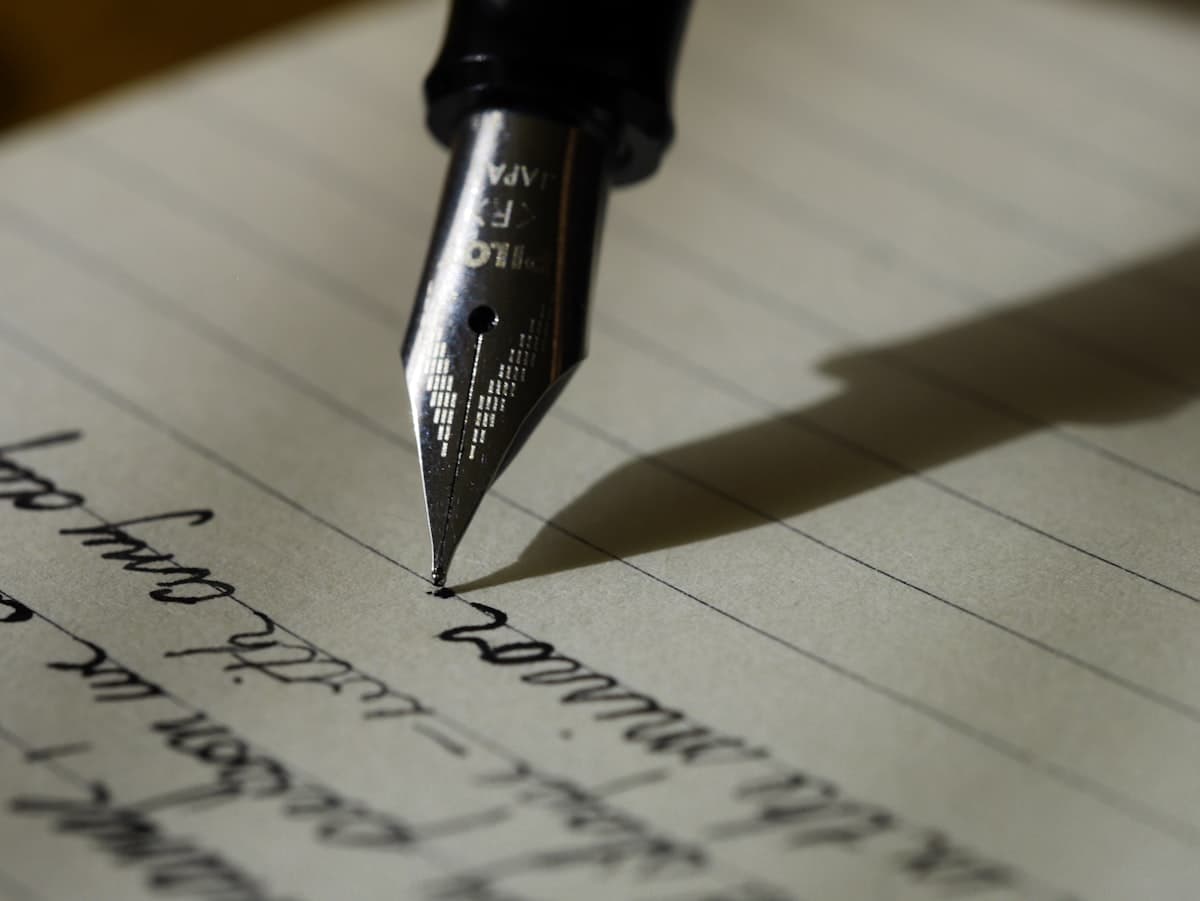
Last week I tried to explain to a business partner an idea that had been bouncing around my head for weeks. I was sure I had it figured out. I had thought about it while driving, while showering, during walks. The idea was "ready."
I sat down to write him an email with the proposal. And three paragraphs in, I realized I had nothing figured out. I had fragments. Loose intuitions. A feeling that something there worked. But when I tried to articulate it precisely, the pieces didn't fit. There were gaps my mind had filled with "I know what I mean" without having defined exactly what that was.
I had to stop, open a blank document, and start writing the idea from scratch. Not for the email. For myself. To understand what I was thinking before trying to communicate it.
Three hours later I had the idea clear. And it was different from what I thought I had in my head before sitting down to write.
This happens to me all the time. And after years dedicated to writing, I'm convinced it's not an accident. Writing serves to discover what you really think, which is almost never what you thought you were thinking before you sat down to write it.
Your Mind Deceives You. Paper Doesn't.
When you think something "in your head," your mind cheats. It fills gaps with vague sensations. It jumps from one point to another without verifying that the logical connection exists. It gives you the illusion that you understand something you're actually just circling without landing.
Writing freezes your thinking in a format you can inspect. It's like taking an X-ray of your ideas. In your head, the idea feels solid. On paper, you see exactly where the broken bones are.
Tim Ferriss, who has built much of his career around writing, says that when he took a class with John McPhee in college, all his notes in other subjects improved. McPhee taught him to eliminate everything superfluous from a text, and that skill of cutting the unnecessary transferred to everything else. When you learn to write with precision, you learn to think with precision.
When you write and try to explain a concept, vague ideas reveal themselves immediately. Either you clarify them or they crumble. Instead of "I'm stressed about work," you end up writing "it stresses me that my boss changes priorities every week because it makes me feel my time is worthless." The difference between those two sentences is the difference between complaining and understanding what's happening to you.
Paul Graham said it better than I could: writing isn't just communicating ideas. It's a way of having them.
Two Garbage Pages a Day
The most effective practice for starting to write is the ugliest one. Ferriss uses a mantra he took from a professional ghostwriter: two garbage pages a day. That's it. They can be horrible. They can be useless. They can be pure mental vomit. But they have to exist.
The reason for setting such a low minimum is that the game has to be winnable. If you set out to write a brilliant essay every morning, you'll quit in three days. If you set out to fill two pages with whatever comes out, you can do it even on bad days. And many days you'll discover that after those obligatory two pages you keep writing because something got unstuck.
Julia Cameron popularized a similar practice with morning pages: three pages of free writing every morning, by hand, unedited, unjudged. Brian Koppelman, the creator of Billions, swears by this practice. Ferriss recommends it. And I've been doing my own version for years within the EMC³ Logbook.
Morning writing does two things. First, it takes the diffuse anxieties and worries floating in your head and freezes them on paper. Once they're written, they stop spinning in your mind and you can get on with your day. Second, it lets you see where your thinking is sharp and where it's lazy. After a few months of doing it daily, you start noticing your patterns: the excuses you repeat, the ideas that keep coming back (those are the ones that matter), and the topics you avoid without realizing it.
Revision Is Where the Magic Happens
Ferriss has a phrase I like: writing is rewriting. The first draft is just raw material. Clarity appears in revision.
Neil Strauss, who has seven or eight New York Times bestsellers, does three rounds of editing with different focuses. The first round edits for himself: what he likes, what amuses him, what he thinks is good. The second round edits for his fans: the people who are going to love that material. The third round edits for critics: those who will look for flaws, inconsistencies, weak points.
Those three perspectives force you to look at your text from angles your ego doesn't naturally choose. And each pass reveals problems the previous ones didn't see.
If you don't have access to a professional editor, Ferriss recommends something he discovered by accident: find someone with legal training. Lawyers, paralegals, anyone who has learned to read contracts. Those people read every word with a magnifying glass, because in a negotiation one ambiguous word can cost you millions. That same attention to detail applied to your writing gives you feedback that few writers can provide.
And there's a test I like to use with anyone who reads my texts: if your mind wanders while reading a paragraph, mark it. If a paragraph bores you, it probably doesn't need to be there. When in doubt about whether something should stay or go, take it out. Almost always the text improves when you subtract rather than add.
Writing as the New Form of Programming
Here's something I discovered while writing my ChatGPT prompt guide in 2021 that changed my perspective on what it means to write well in this era.
Artificial intelligence turned natural language into the new universal programming language. Your ability to write with clarity and precision now translates directly into your ability to make machines execute what you imagine.
The best prompts are the best written ones. Describe precisely what you want and Midjourney creates art that previously required a designer and weeks of work. Ask the right question and Claude synthesizes doctoral-level knowledge for you. A well-structured prompt can generate a functional application.
Writing well now IS programming well. IS designing well. IS researching well.
Every improvement in your writing amplifies what you can create with these tools. The distance between a vague prompt and a precise one is enormous, and it shows in the results.
That experiment of writing the prompt guide forced me to go deeper in ways I never would have achieved just by "trying" the tool. To explain something clearly, I first had to understand it myself. To structure a coherent guide, I had to experiment with different approaches and document what worked and what didn't. And the fact that I published that guide connected me with people who ended up being important in my career. It led me to rethink my agency, to make a pivot I didn't know I wanted to make, and eventually gave me the confidence to write books.
All because I decided to materialize my thinking into words.
How to Write Without Falling Asleep Trying
Writing well is not a talent you win in a genetic lottery. It's a muscle you train. After years of doing it, there are some principles that have served me more than any creative writing course.
Clarity always wins. Forget about sounding smart. Focus on being understood. Precision beats fancy words. Getting to the point beats beating around the bush. If you can say it in five words, don't use fifteen.
Kill zombie words. The "verys," the "quites," the "reallys." They're textual parasites that take up space without contributing anything. Use active voice: "Maria solved the problem" instead of "the problem was solved by Maria." Passive voice drains energy from everything you write.
Think like your reader. Anticipate the questions they'll have. Give context without treating them like they know nothing. Adjust your tone based on who you're talking to. You don't write the same way to a CEO as to a college student.
Give it rhythm. Good writing has a beat, like good music. Short sentences. Then a longer one that develops the idea without losing the reader along the way. Build toward moments of impact and then give them a breather. Monotony in sentence length is what makes a text feel flat even when the content is good.
Be specific. "We increased sales" says nothing. "We jumped from $10K to $47K in 30 days" says everything. Concrete details are what make an idea stick in the reader's mind. Abstract theory gets forgotten. Real examples stay.
The Practice That Holds Everything Else Together
Whether it's a video, a podcast, a course, a voice note, a sales email, or a love letter. Everything starts with words. Writing is the foundation that supports all other communication formats. Without clear words, whatever you produce next won't have substance.
Unlike a conversation that evaporates when it ends, what you write continues to exist. It can reach thousands of people on a Tuesday at 3 AM while you're sleeping. A good text keeps generating impact years after you published it, even when you no longer remember writing it. It's your thinking working without you having to be present.
Most people write the way they talk: in a hurry, unfiltered, hoping the other person guesses what they meant. When you learn to write well, you do the opposite. You force your ideas to organize before going out into the world. Your writing becomes the visible proof that you think, that you make the effort to generate your own ideas instead of repeating what you heard somewhere.
If you want to start, start tomorrow. 15 minutes. A notebook. Write whatever comes out. Don't judge it. Do it again the next day. And again. After a month you'll notice you think differently, because you gave your mind a space to process what before was just bouncing wall to wall inside your head.
At Contentu we share tools and templates to integrate writing into your daily practice, including the EMC³ Logbook. Find us at www.contentu.co.
Create your account to keep reading
It is free and takes two minutes. With an account you read every article in full, and get into the Lab and the community events.
Create my free accountNo card required. The VIP membership is separate and optional.

By
Santiago Vini Garcia
Author of The Digital Alchemist Path and Quantum Clarity. Writes about digital business, personal transformation, and the intersection of technology and human connection.
Comments
Log in to leave a comment.